The particular spirituality of the Appalachian Riders For Our Lady is based on our three foundational principles of commitment, continuity and conversation in addition to the general Catholic evangelical counsels of poverty, chastity, obedience and stability adapted to a lay context. The Riders strive to promote a conversational culture, proclaiming Christ crucified, authentically Christian and Catholic, in the midst of a world largely lacking culture of any sort. Our vows of commitment, continuity, and conversation do not necessarily mean that we have any natural inclination or talent in these areas. I’m a member of St George Melkite Greek Catholic parish in Sacramento. My booklist, which is in a way deep in history (each Rider, during their novitiate, settles on 24 books of primary importance), is:
- Bible, unabridged Revised Standard Version
- Horologion; Melkite Greek Catholic liturgy
- Vergil’s Aeneid; Sarah Ruden translation
- Songs for Pascha; St Ephrem the Syrian
- The Confessions; Saint Augustine
- Dante’s Divine Comedy; Anthony Esolen
- Comedies and Tragedies; Shakespeare
- Complete English Poems; John Donne
- Complete Poetry & Prose; Robert Frost
- The Translations of Seamus Heaney
- Mansfield Park & Emma; Jane Austen
- The Age of Innocence; Edith Wharton
- The Brothers Karamazov; Dostoevsky
- Novels 1926-1954; William Faulkner
- History and Eschatology; N.T. Wright
- Hannah’s Children; Catherine Ruth Pakaluk
- Gospel According to John; St. Theophylact
- Catechism of the Ukrainian Catholic Church
- Saint Paul’s Prison Epistles; Bruce & Fee
- Catholic Theology; Thomas Joseph White
- Orthodox Christianity, v4; Hilarion Alfeyev
- In the Beginning (John 1:1-18); A. Esolen
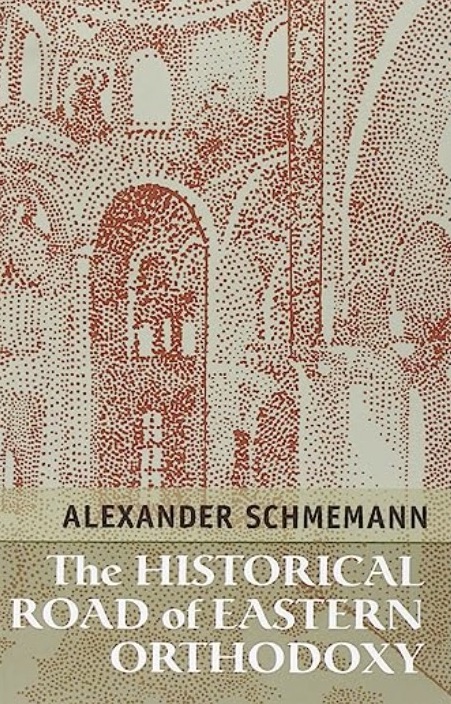
- For the Life of the World; A. Schmemann
- The Liturgy of the Hours; unabridged
The Appalachian Riders For Our Lady have a particular interest in the season of Ascensiontide, which we consider nearly as important as Advent and Lent. My particular interest is: That ecclesial bodies with very different Ecclesiology seem to have very similar Christology.
Christian Perspectives
The foundation of everything is Christ Jesus, and him crucified. However, beyond the personal aspects of that (reading, listening, prayer), what are the implications for our social relationships?
I want to commend the Catholic perspective to you. Of course, that raises several questions:
- Is it reasonable to speak of THE Catholic perspective?
- Is my characterization of this perspective warranted?
- Can one also speak of THE Protestant perspective, especially given the range of protestant ecclesial bodies?
I propose that the protestant perspective is that the Christian life is best lived and considered from the primary viewpoint of the individual or, at most, the congregation. On the other hand, I commend the Catholic perspective: the Christian life is best lived and considered from the primary viewpoint of the universal Church, the Bride of Christ, extended in spacetime and militantly subsisting in the Catholic Church whose chief steward is the bishop of Rome (for better or worse). Besides addressing those preliminary questions, I intend to commend the Catholic perspective in three aspects:
- better able to cope with adversity
- more resources for spiritual formation
- closer alignment with the scriptural canon
All these points are controversial; however, I intend not to argue for them but rather to chew on them. The difference between a primarily individual perspective and a primarily ecclesial perspective also has a significant political component since the State desires no competitor to its hegemony (see, for example, Alan Jacobs biography of The Book of Common Prayer which documents how this worked out in England) and hence is inclined to favor an individual perspective which it can divide and conquer.
I’m also assuming that the more alive an entity, the more applicable the principle that the whole is more than the sum of its parts. In addition, whenever possible I’d like to phrase matters sociologically. A major advantage of a perspective more social than individual is that one can “check one’s answers”– the boredom of, for example, discussion about end-time scenarios or sectarian doctrine being that one can not check one’s theory in one’s day to day life and interactions with others as one can, on the other hand, regarding ethics and how to live in community. Somewhat related to this, I prefer to get my history indirectly, via literature.
On a personal level, I think the core of the Protestant error centers on the attempt to place faith above love (see Luther’s commentary on Galatians) contra Saint Paul and the Catholic tradition.
The noted Evangelical scholar Mark Noll, in the book ‘Is the Reformation Over’, argues that Catholic and Protestant disagreements really come down to different understandings of the nature of the Church. I don’t disagree; however, I very much disagree with the view that “well, maybe so but that’s not important to me..it’s my personal relationship with God that is important.” The nature of the Church is essentially intertwined with the work of the Holy Spirit, as is reflected in the Nicene creed. God is able to sustain what was initially established (..I will build my church, and the gates of hell shall not prevail against it) and it is wrong-headed to try to start over on one’s own.
Technology is very important and clearly the most important technology is language. The people who know the most about language are not the philosophers but the poets, broadly defined.
“Science is the belief in the ignorance of experts.” (Richard Feynman)
“The Catholic Church is the Church we mean when we say The church.” (Lenny Bruce)
“If people do not believe that mathematics is simple, it is only because they do not realize how complicated life is.” (John von Neumann)
“Don’t get involved in partial problems, but always take flight to where there is a free view over the whole single great problem, even if this view is still not a clear one.” (Ludwig Wittgenstein)
“The past is never dead. It’s not even past.” (William Faulkner)
“If only it were all so simple! If only there were evil people somewhere insidiously committing evil deeds, and it were necessary only to separate them from the rest of us and destroy them. But the line dividing good and evil cuts through the heart of every human being. And who is willing to destroy a piece of his own heart?” (Aleksandr Solzhenitsyn)
The Strategy of Teaching
I aim to convey by my Little Library that I’m an orthodox Catholic of the Byzantine Thomist persuasion, who works as an English teacher and who likes to travel. As Northrop Frye says in the section on The Rhetoric of Non-Literary Prose in his book Anatomy of Criticism:
“…A good deal of the strategy of teaching is rhetorical strategy, choosing words and images with great care in order to evoke the response: ‘I never thought of it that way before,’ or ‘Now that you put it that way, I can see it.’ What distinguishes, not simply the epigram, but profundity itself from platitude is very frequently rhetorical wit. In fact it may be doubted whether we ever really call an idea profound unless we are pleased with the wit of its expression. Teaching, like persuasion, employs a dissociative rhetoric aimed at breaking down habitual response: the maddening prolixity of Oriental sutras results from this, and there are passages in the New Testament almost as dissociative as Gertrude Stein:
’That which was from the beginning, which we have heard, which we have seen with our eyes, which we have looked upon, and our hands have handled, of the Word of life, (For the life was manifested, and we have seen it, and bear witness, and show unto you that eternal life, which was with the Father, and was manifested unto us). That which we have seen and heard declare we unto you.’
“Without trying to suggest that only good writers can be good philosophers, we may still observe that much of the difficulty in a philosophical style is rhetorical in origin, resulting from a feeling that it is necessary to detach and isolate the intellect from the emotions.”
Speaking of being a schoolteacher, here are another twenty four books: a second shelf to my little library, so to speak, with a focus on comparative literature.
- The Jerusalem Bible, Readers Edition
- Don Quixote; Miguel de Cervantes
- Ivanhoe & other stories; Walter Scott
- Lord Jim & Nostromo; Joseph Conrad
- Collected Plays 1944-1961; Arthur Miller
- Various Novels 1881-1901; Henry James
- Collected Novels; Nathaniel Hawthorne
- Moby Dick, or The Whale; Herman Melville
- Aristotle’s Nicomachean Ethics; Pakaluk
- Dialogues and Ethics; Plato and Aristotle
- Mimesis: Literature; Erich Auerbach
- The Shield of Achilles; W. H. Auden
- English Metaphor & Argument; Farnsworth
- The Normal Christian Life; Watchman Nee
- The Human Condition; Hannah Arendt
- Benjamin Harrison; two biographies
- Ancient Roman History; Tacitus & Livy
- Eastern Theology; Zizioulas, Solovyov, Palamas
- Solzhenitsyn Reader: Writings 1947-2005
- Life & Letters of Father Pierre-Jean de Smet
- The Hundred Years War; Jonathan Sumption
- Mathematical Methods of Mechanics; Arnold
- Relativity & Cosmology; Christian Böhmer
- Summa Theologica; St Thomas Aquinas
In my opinion, the best writers have the sort of objectivity which Edmund Wilson attributed to Shakespeare and Henry James:
“One would be in a position to appreciate James better if one compared him with the dramatists of the seventeenth century—Racine and Molière, whom he resembles in form as well as in point of view, and even Shakespeare, when allowances are made for the most extreme differences in subject and form. These poets are not, like Dickens and Hardy, writers of melodrama—either humorous or pessimistic, nor secretaries of society like Balzac, nor prophets like Tolstoy: they are occupied simply with the presentation of conflicts of moral character, which they do not concern themselves about softening or averting. They do not indict society for these situations: they regard them as universal and inevitable. They do not even blame God for allowing them: they accept them as the conditions of life.”
Seven Favorite Books
“I want to learn more about Christianity, what seven books would you recommend?”
- Exodus
- Psalms
- Wisdom
- Luke
- John
- Corinthians
- Hebrews
Combined Booklist
- Sacred Scripture
Bible, unabridged Revised Standard Version
Horologion; Melkite Greek Catholic liturgy
Liturgy of the Hours; unabridged
The Jerusalem Bible, Readers Edition - Poetry and Plays
Vergil’s Aeneid; Sarah Ruden translation
Songs for Pascha; St Ephrem the Syrian
Dante’s Divine Comedy; Anthony Esolen
Plays and Poetry; William Shakespeare
Complete English Poems; John Donne
Collected Poetry & Prose; Robert Frost
Collected Plays 1944-1961; Arthur Miller
The Shield of Achilles; W. H. Auden
Collected Translations of Seamus Heaney - Method
Relativity & Cosmology; Christian Böhmer
Mathematical Methods of Mechanics; Arnold
Ancient Roman History; Tacitus & Livy
Benjamin Harrison; two biographies
History & Eschatology; N. T. Wright
Life & Letters of Father Pierre-Jean De Smet
The Hundred Years War; Jonathan Sumption
For the Life of the World; A. Schmemann
Orthodox Christianity, v4; Hilarion Alfeyev
Mimesis: Literature; Erich Auerbach
English Metaphor & Argument; Farnsworth
Hannah’s Children; Catherine Ruth Pakaluk
Aristotle’s Nicomachean Ethics; Pakaluk
Dialogues and Ethics; Plato and Aristotle - Exegesis
Gospel According to John; St Theophylact
Saint Paul’s Prison Epistles; Fee & Bruce
The Normal Christian Life; Watchman Nee
In the Beginning (John 1:1-18); A. Esolen - Doctrine
Catechism of the Ukrainian Catholic Church
Summa Theologica; St Thomas Aquinas
Catholic Theology; Thomas Joseph White
Eastern Theology; Zizioulas, Solovyov, Palamas - Prose
The Confessions; Saint Augustine
Don Quixote; Miguel de Cervantes
Ivanhoe & other stories; Walter Scott
Mansfield Park & Emma; Jane Austen
Collected Novels; Nathaniel Hawthorne
The Brothers Karamazov; Dostoevsky
Moby Dick, or The Whale; H. Melville
Various Novels 1881-1901; Henry James
Lord Jim & Nostromo; Joseph Conrad
The Age of Innocence; Edith Wharton
The Human Condition; Hannah Arendt
Novels 1926-1954; William Faulkner
Solzhenitsyn Reader: Writings 1947-2005
The reading program of the Appalachian Riders for Our Lady is based on three fundamental principles:
- I’m ignorant and have much to learn.
- Reading one book helps in reading and enjoying another book.
- The cross-fertilization will occur naturally, no need to push it.
We all have Bibles and the Liturgy of the Hours in our individual booklists. Other than that, there is a good bit of variety but also a fair amount of overlap. I myself find it useful to group my books into six categories.
“Finally, brothers, whatever is true, whatever is honourable, whatever is just, whatever is pure, whatever is lovely, whatever is commendable, if there is any excellence, if there is anything worthy of praise, think about these things.”



 Maude's Tavern